What Happens If You Stay on a Legacy Phone System? | TCI
What Happens If You Stay on a Legacy Phone System? (More Than You Think)
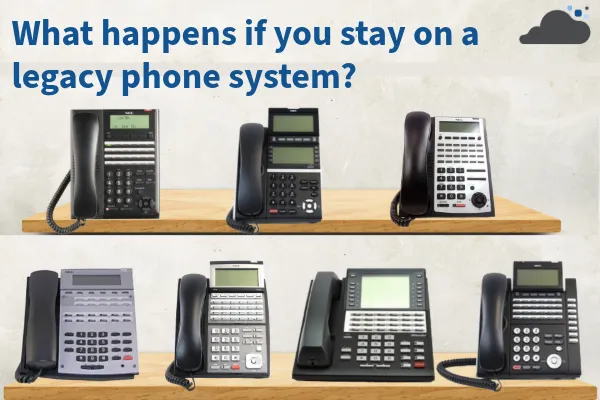
There's a phone system sitting in the corner of your office — maybe an NEC, maybe a Cisco CallManager from 2012, maybe a Mitel that your IT guy set up years ago and hasn't touched since. It works. Sort of. People can make calls, transfer to other extensions, and set up a voicemail greeting. So what's the problem?
The problem is what's happening quietly in the background. Legacy phone systems don't fail dramatically. They fail slowly — through mounting costs, growing security vulnerabilities, declining vendor support, and an increasing inability to keep up with how modern businesses actually communicate. By the time most businesses realize the damage, they've already paid for it.
If you're running an on-premise PBX or a legacy phone system that's more than five years old, here's what you need to know.
1. End of Life Means End of Protection
Every phone system has a manufacturer support lifecycle. When a system reaches end-of-life (EOL) — as many NEC systems have — the manufacturer stops releasing firmware updates, security patches, and bug fixes. The hardware doesn't change. The vulnerabilities do.
For business owners and IT managers, this creates a ticking clock. Every day your system runs without security patches is another day a bad actor could exploit a known vulnerability in your phone network. VoIP fraud, toll fraud, and eavesdropping on business calls are not hypothetical threats — they are active, documented attacks that specifically target unpatched PBX systems.
When your phone system vendor stops supporting your hardware, you don't just lose access to upgrades. You lose your last line of defense against an entire category of attack.
2. You're Paying More Than You Think
One of the most common misconceptions about legacy phone systems is that keeping them is the "affordable" choice. The logic seems reasonable: the hardware is already paid for, so staying put costs less than upgrading. In reality, the opposite is often true. Click here to see a cost comparison.
Hardware Maintenance and Repair
As systems age, replacement parts become scarce and expensive. Third-party maintenance contracts for out-of-support systems carry a significant premium — and when a component fails, you may be looking at days of downtime waiting for a part that's no longer manufactured.
Per-Line Costs That Haven't Changed Since 2010
Most legacy PBX systems rely on traditional SIP trunks or PRI circuits — infrastructure pricing that hasn't evolved with the market. Businesses that have switched from aging phone contracts to modern cloud communications platforms routinely find they're paying either about the same or less for significantly more capability.
The Hidden Cost of IT Time
Every hour your internal IT staff or outsourced managed service provider spends troubleshooting an aging phone system is an hour not spent on strategic work. Legacy systems require more maintenance, more workarounds, and more emergency interventions than modern alternatives.
3. Your Team Can't Work the Way Modern Teams Work
The shift to hybrid and remote work changed what businesses need from their phone systems permanently. Legacy on-premise PBX systems were designed for a world where everyone sat at a desk in the same building. That world no longer exists for most organizations.
When your team works remotely — even part of the time — a legacy system creates friction at every turn:
•Calls can't follow employees to their mobile devices without complex, expensive call forwarding configurations.
•There's no unified messaging — voicemail, email, chat, and video calls exist in completely separate silos.
•Remote workers are often invisible to the phone system entirely, creating communication gaps that clients notice.
•Collaboration features like presence indicators, shared directories, and integrated video conferencing simply don't exist.
Modern cloud communications platforms — UCaaS solutions — treat voice, video, messaging, and collaboration as a single unified experience. Employees use a single app on any device, from anywhere, and appear seamlessly connected to clients and colleagues regardless of where they're working.
For business leaders, this isn't just a convenience question. It's a competitive one. Companies that communicate faster and more fluidly than their competitors close more deals, retain more clients, and attract better talent.
4. Vendor Support is Gone — And So Is Your Safety Net
When something goes wrong with a supported phone system, you call the vendor, open a ticket, and get help. When something goes wrong with an end-of-life system, you call the vendor and get told they no longer support that product.
For NEC phone systems specifically — one of the most widely deployed legacy systems across Virginia and the mid-Atlantic region — many models have reached or are approaching end of support. This means:
•No manufacturer troubleshooting or repair assistance
•No software or firmware updates
•No access to new features or capabilities
•Increasing difficulty finding certified technicians with legacy expertise
•No path forward within the existing platform
The only responsible path for businesses running unsupported hardware is migration. The question isn't whether to move — it's when, and how to do it without disrupting operations.
5. Compliance and Liability Risks Are Growing
Depending on your industry, your phone system may carry regulatory implications you haven't fully considered. Healthcare organizations subject to HIPAA, financial services firms under SEC or FINRA oversight, and legal practices with attorney-client privilege obligations all have specific communication security requirements.
Legacy systems often lack the encryption, audit logging, and access controls that modern compliance frameworks require. Running unpatched, unsupported communications infrastructure in a regulated industry isn't just an operational risk — it can be a compliance liability that exposes your organization to fines, legal action, or reputational damage.
If your legal, compliance, or cybersecurity insurance team hasn't asked about your phone system yet, they will. Modern cyber liability policies increasingly scrutinize communication infrastructure as part of overall security posture assessments.
6. The Migration Is Easier Than You Think
Many business owners delay the move away from legacy systems because they assume the transition will be disruptive. A ripped-out phone system, days of downtime, employees who don't know how to use new equipment, and a bill that's hard to predict.
In practice, a well-managed migration to a cloud communications platform is typically completed with minimal disruption and often without a single hour of downtime. Modern hosted phone systems can port your existing numbers, integrate with your current CRM and productivity tools, and have employees up and running with a new app on their existing devices within hours.
At TCI, our migration process includes a full audit of your current environment, a clear cost comparison, a phased cutover plan designed around your business hours, and hands-on onboarding for your team. We've done this for businesses across Virginia and the mid-Atlantic — from small professional services firms to multi-location enterprises — and the outcome is consistently the same: lower monthly costs, better capabilities, and teams that wonder why they waited so long.
The Bottom Line: Legacy Systems Don't Stay Still — They Fall Behind
A legacy phone system isn't just an outdated piece of hardware. It's an accumulating liability — in cost, security exposure, compliance risk, and lost productivity. Every month you stay on an unsupported system is a month you're paying more than you need to for a system that's doing less than it should.
Spring is a natural time to revisit the infrastructure decisions your business hasn't looked at in years. If your phone system is one of them, the good news is that the path forward has never been clearer or more affordable.
Still Running a Legacy Phone System?
Schedule a free consultation with TCI. We'll audit your current setup, show you exactly what you're paying vs. what you could be paying, and walk you through a migration plan with zero pressure.
