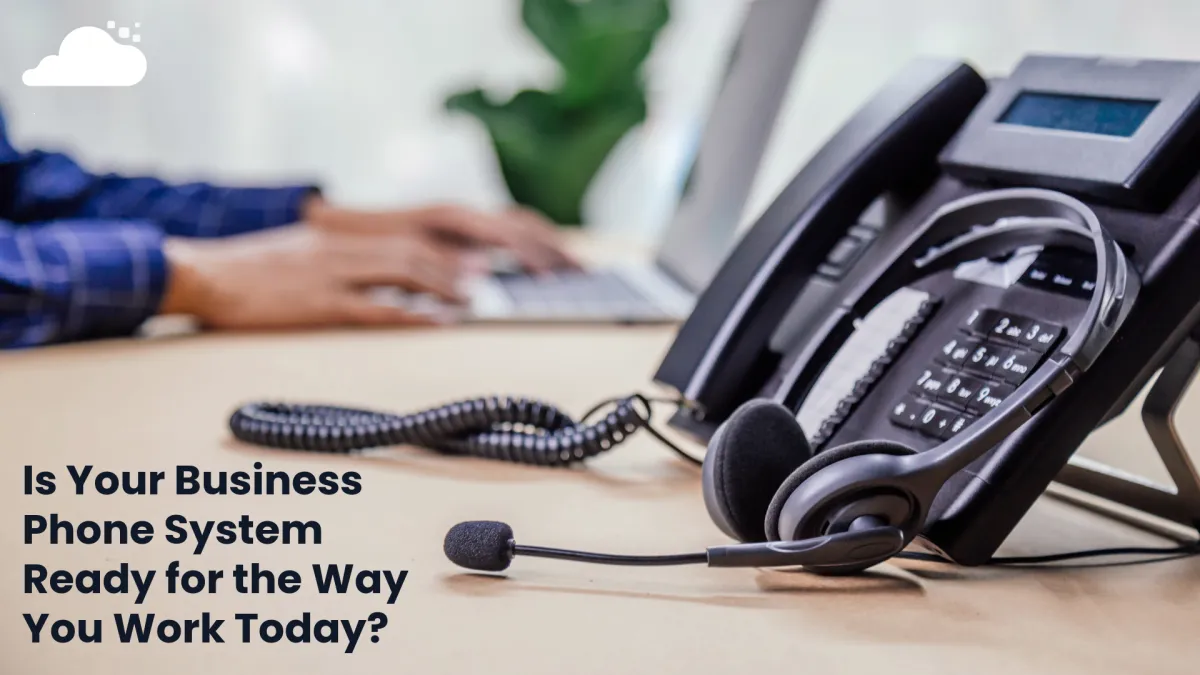
Is Your Business Phone System Ready for the Way You Work Today?
Is Your Business Phone System Ready for the Way You Work Today?
Your phone system might be working. Calls come in. Calls go out. On the surface, everything looks fine.
But "working" and "working for you" are two very different things.
Across nearly every industry, businesses are still relying on phone systems that were installed years—sometimes decades—ago. These systems were built for a different kind of workplace: one where employees sat at a desk, in one building, during fixed hours, and customers were content to wait on hold or leave a voicemail.
That's not how business happens anymore.
Employees work from multiple locations. Customers expect faster responses, often through channels other than a phone call. Teams need to communicate seamlessly from laptops, mobile phones, and tablets. And business leaders want visibility—call reporting, CRM integration, AI-powered tools, and the flexibility to scale up or down without a truck roll from a technician.
When your phone system can't keep up with any of that, it stops being a neutral piece of office equipment. It becomes a liability that quietly limits what your business can do.
Let's look at what it means for a phone system to be "ready" for how businesses actually operate today—and how to know if yours has fallen behind.
Signs Your Phone System Is Becoming a Liability
Most outdated phone systems don't fail all at once. They fail slowly, in ways that are easy to write off as "just how it is." Here are some of the most common warning signs:
You're paying for hardware maintenance that never ends. Legacy on-premises PBX systems require physical servers, wiring, and specialized technicians to maintain. When something breaks, you're waiting on a service call instead of fixing it yourself.
Remote and hybrid employees are stuck using workarounds. If your team is forwarding calls to personal cell phones or relying on separate apps just to stay reachable, your phone system isn't actually supporting how your business operates.
You have no visibility into call activity. No reporting, no analytics, no way to know how many calls are missed, how long customers wait, or which team members need coaching.
Adding a new employee or location is a hassle. Scaling an old system often means new hardware, new wiring, and delays—rather than a few clicks in a web portal.
It doesn't talk to your other business tools. Your phone system operates in its own silo, disconnected from your CRM, helpdesk, or messaging platforms.
If any of this sounds familiar, it's a sign that your communications infrastructure is due for a serious evaluation.
Why Businesses Are Moving Toward Cloud Communications
The shift from traditional phone systems to cloud-based communications isn't just a trend—it's a response to how business actually gets done now.
Cloud communications platforms, often referred to as UCaaS (Unified Communications as a Service) or hosted VoIP, move your phone system off physical hardware and onto a secure, internet-based platform. Instead of maintaining an on-site PBX, your business connects through an internet connection, with the provider managing the infrastructure, updates, and security behind the scenes.
This shift matters for a few key reasons:
Lower overhead. No more maintaining aging hardware or paying for emergency repairs.
Built-in scalability. Adding a new user, location, or phone number typically takes minutes, not weeks.
Reliability and redundancy. Reputable cloud providers offer geographic redundancy and uptime guarantees that most single-location on-premises systems simply can't match.
Faster access to new features. Updates and new capabilities roll out automatically, rather than requiring costly upgrades.
For growing businesses—or any business trying to control costs while improving service—cloud communications has become less of a "nice to have" and more of a baseline expectation.
How Modern Systems Support Hybrid and Mobile Employees
One of the clearest signs that the workplace has changed is where work actually happens. Employees split time between the office, home, client sites, and the road. A phone system tied to a physical desk phone in a single building doesn't reflect that reality anymore.
Modern cloud-based phone systems solve this by extending business communications to wherever employees are:
Softphone apps let employees make and receive business calls from a laptop or mobile device using their business number—not their personal one.
Single number reach ensures customers can always reach an employee at one number, regardless of which device picks up.
Presence and status indicators let teams know who's available, on a call, or away, even when everyone is working from a different location.
Unified messaging brings voice, video, and chat into one platform, so employees aren't juggling multiple disconnected apps.
This isn't just about convenience. It's about making sure hybrid and mobile employees can perform at the same level as someone sitting at a desk in the office—without gaps in communication that slow down the business or frustrate customers.
Features That Can Improve Customer Communication
Customer expectations have shifted just as much as employee work habits. People want fast answers, and they don't always want to get them over a phone call. A modern communications platform gives businesses more ways to meet customers where they are:
Business text messaging allows customers to text a business number directly, which is often faster and more convenient than a phone call.
Call routing and auto-attendants ensure calls reach the right person or department the first time, reducing frustrating transfers.
Call reporting and analytics give managers visibility into call volume, wait times, and missed calls, so problems can be identified and fixed before they affect customer satisfaction.
CRM integration connects phone activity directly to customer records, so employees have context before they even pick up the phone.
Voicemail-to-email or voicemail transcription ensures messages don't get lost or forgotten in a shared mailbox.
Individually, each of these features might seem like a small convenience. Together, they add up to a noticeably better experience for customers—and a more efficient one for employees.
How AI Is Changing Business Communications
Artificial intelligence has become one of the biggest differentiators between legacy phone systems and modern communications platforms.
AI-powered tools built into cloud communications platforms can now:
Transcribe and summarize calls automatically, saving employees from manually taking notes during customer conversations.
Analyze call sentiment and trends, helping managers spot recurring customer concerns or coaching opportunities.
Power intelligent call routing, directing customers to the right resource faster based on the reason for their call.
Support virtual assistants and chatbots that can handle routine questions, freeing up staff for more complex conversations.
These capabilities aren't experimental add-ons anymore—they're becoming standard features on many cloud communications platforms. For businesses still using a decades-old phone system, AI-driven tools like these simply aren't an option, which puts them at a real disadvantage compared to competitors who've already made the switch.
What to Consider Before Replacing an Existing System
Upgrading your business phone system is a meaningful decision, and it's worth approaching thoughtfully rather than rushing toward the newest technology just because it exists. Before making a change, consider:
Your current pain points. Are you dealing with reliability issues, limited mobility, poor reporting, or a lack of integration? Understanding your specific challenges helps determine which features actually matter for your business.
Your growth plans. A system that fits your business today should also be able to scale with you—whether that means adding employees, opening new locations, or supporting more remote workers.
Integration needs. Look at the other platforms your business relies on, such as CRM or helpdesk software, and evaluate whether a new communications platform can connect with them.
Implementation and support. A new phone system is only as good as the support behind it. Consider who will be helping with setup, training, and ongoing troubleshooting.
Total cost of ownership. Look beyond the monthly price to understand what's included, what add-ons cost extra, and how the pricing compares to what you're currently spending on maintenance, hardware, and inefficiencies.
The goal isn't to chase the latest technology trend. It's to find a communications platform that genuinely makes your business more productive, more accessible to customers, and easier to manage day to day.
Is It Time to Rethink Your Business Phone System?
Business communication has changed dramatically, but a lot of phone systems haven't kept pace. If your team is stretched across multiple locations, your customers expect faster and more flexible communication, and you're missing out on features like AI-powered insights, text messaging, and CRM integration, it may be time to take a closer look at what your current system is—and isn't—doing for your business.
A modern communications platform isn't just about replacing old hardware. It's about giving your business the tools to work the way people actually work today.
If you're still using an older phone system and aren't sure whether it's time for a change, TCI can help you evaluate your options and find a solution built for how your business operates now—not decades ago.
Schedule a consultation with TCI Now to start your journey into better communications.
