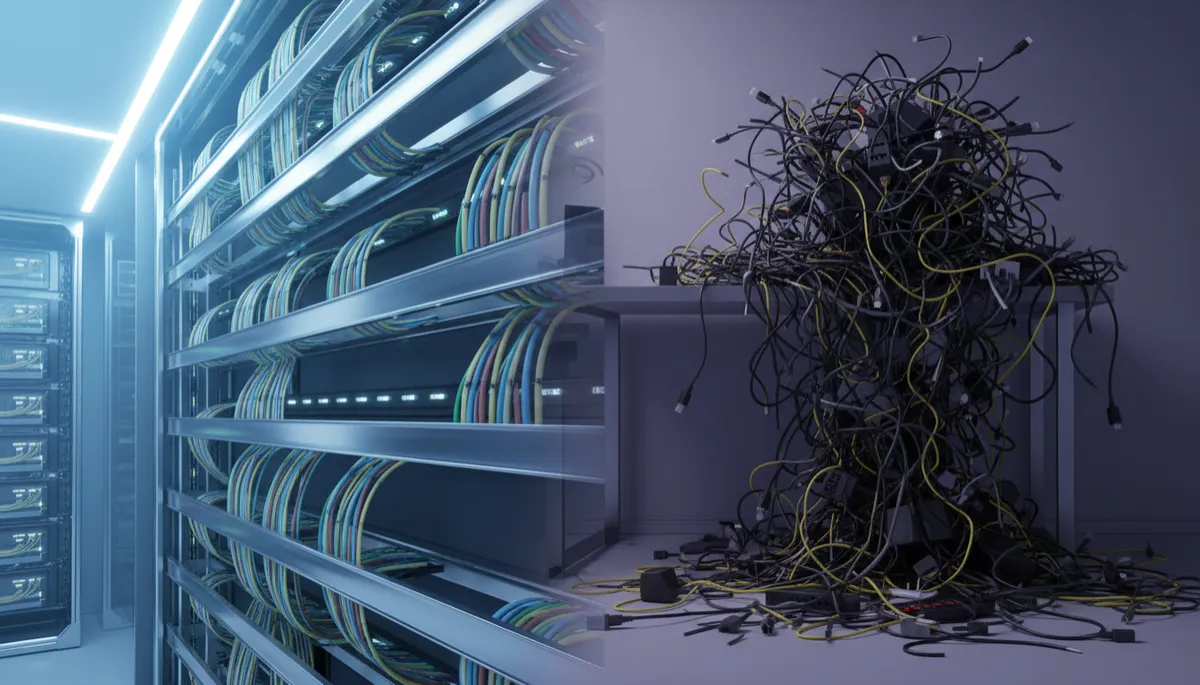
Structured Cabling: Building Your Networks Foundation
Structured Cabling, Network Infrastructure, Cable Management, Business Networking
Building a Strong Business Network Infrastructure with Structured Cabling
A resilient, high‑performance network is no longer a nice‑to‑have for modern organizations—it is the backbone of every critical workflow, customer interaction, and cloud‑based service. The way you design and deploy your structured cabling today will determine how well your business can scale, adapt, and compete tomorrow.
Why Structured Cabling Is the Foundation of Modern Network Infrastructure
Network Infrastructure is more than switches, access points, and firewalls—at its core, it is a physical medium problem. Structured Cabling provides a standardized, hierarchical framework for low‑voltage wiring that supports voice, data, video, and wireless backhaul across the entire facility. Instead of ad‑hoc runs pulled whenever a new device appears, structured cabling consolidates connectivity into properly engineered pathways, patch panels, and telecommunications rooms.
A standards‑driven approach—aligned with TIA/EIA and BICSI best practices—ensures consistent performance characteristics, predictable capacity, and simplified troubleshooting. For agencies, enterprises, and multi‑site organizations, this translates directly into better uptime, easier moves‑adds‑changes, and a lower total cost of ownership for Business Networking infrastructure.
The Hidden Cost of the “Cable Monster” and Messy Cabling
Many organizations only recognize the importance of Cable Management when something goes wrong. Over time, quick fixes and unplanned expansions create what technicians call the Cable Monster—a tangled mass of patch cords, undocumented runs, and unlabeled terminations. This messy cabling does more than offend aesthetic sensibilities; it actively undermines the stability, security, and scalability of your Network Infrastructure.
Increased downtime: Tracing a single connection through a Cable Monster can take hours, extending outage windows and disrupting operations.
Higher error rates: Strain on connectors, accidental disconnections, and improper bend radii lead to intermittent failures that are difficult to diagnose.
Thermal and safety risks: Dense, unorganized bundles obstruct airflow around active equipment, increasing heat and, in extreme cases, fire risk.
Security and compliance issues: Unlabeled, undocumented links make it difficult to enforce segmentation, audit connectivity, or validate compliance controls.
In short, messy cabling silently erodes network reliability and adds friction to every IT initiative. Reclaiming control from the Cable Monster requires more than cosmetic cleanup—it demands a deliberate, structured cabling strategy built for long‑term performance and scalability.
Core Principles of Building Network Infrastructure the Right Way
Whether you are designing a new facility or retrofitting an existing office, a disciplined approach to Structured Cabling will determine how effectively your Business Networking environment can support cloud applications, collaboration tools, and future‑proof wireless coverage. Several foundational principles should guide your design and implementation.
1. Plan for Capacity, Not Just Current Demand
Modern businesses rarely shrink their connectivity footprint—devices, IoT endpoints, and bandwidth‑intensive applications continue to proliferate. When designing Network Infrastructure, engineer pathways, cable counts, and rack space for at least several growth cycles. This includes:
Pulling additional cable runs to each workstation area for future devices and VoIP endpoints.
Allocating extra strands of fiber between main distribution frames and intermediate distribution frames.
Reserving rack units and patch panel positions for future switches, wireless controllers, and security appliances.
2. Standardize Cabling Paths and Labeling
Consistency is the antidote to messy cabling. A well‑documented structured cabling design defines pathways, conduit utilization, and cable routing rules for every floor and every closet. Equally important, every termination—on patch panels, outlets, and equipment ports—must be labeled according to a clear schema that maps back to floor plans and logical network segments.
This level of discipline transforms troubleshooting. Instead of visually following cables through a Cable Monster, technicians can rely on documentation to identify endpoints, VLAN assignments, and patching requirements. For agencies managing multiple client environments, standardized labeling also reduces onboarding time for new engineers and third‑party support teams.
3. Prioritize Cable Management Hardware and Pathways
Effective Cable Management is not an afterthought—it is engineered into the Network Infrastructure from day one. Vertical and horizontal managers, ladder racks, J‑hooks, and underfloor raceways keep copper and fiber runs physically separated, properly supported, and accessible. The objective is to maintain bend radius, minimize mechanical stress, and preserve airflow around electronics, while still allowing technicians to add or remove connections cleanly.
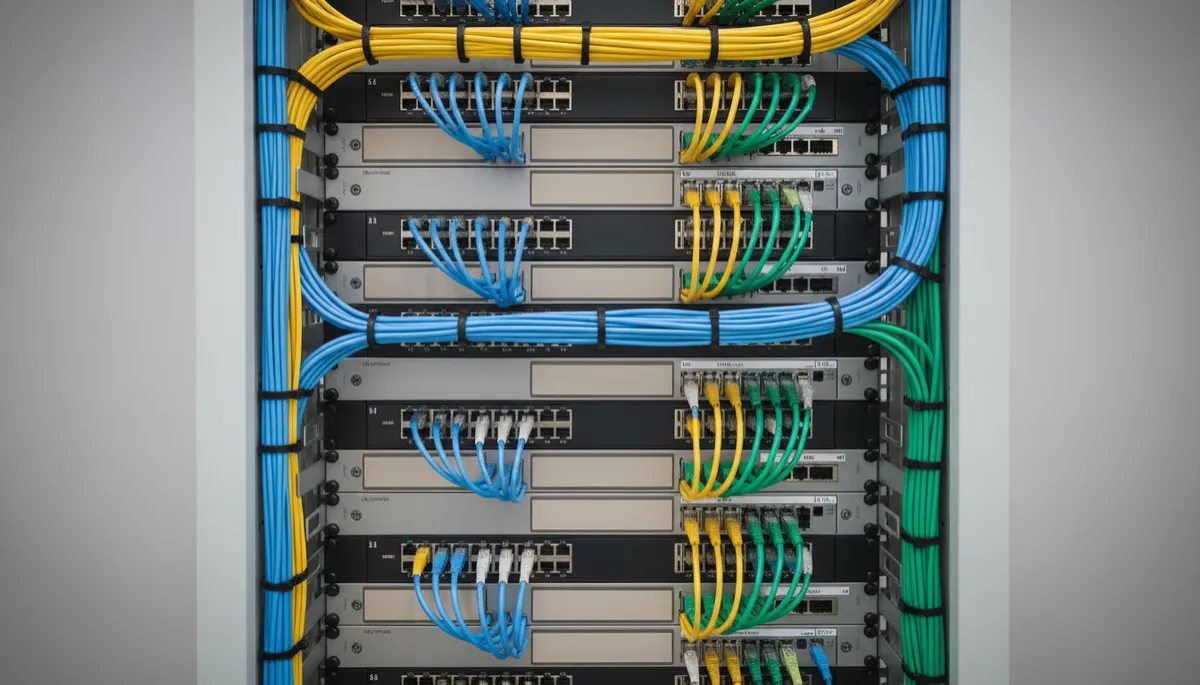
‑tone close‑up of a network rack with structured cabling routed through vertical and horizontal...
Thoughtful cable management eliminates the cable monster and accelerates every maintenance task.
4. Design for Wireless, Remote Work, and Future Technologies
Even in a wireless‑first world, Structured Cabling remains critical. Access points require reliable PoE connections and high‑bandwidth uplinks—often Cat6A or better—to support dense client loads. Edge switches, security cameras, collaboration endpoints, and IoT sensors all depend on robust physical infrastructure. A strategic cabling design anticipates:
Higher‑power PoE standards for next‑generation access points and endpoints.
Additional drops in conference rooms, collaboration spaces, and hot‑desking areas to support flexible work models.
Fiber uplinks between core and distribution layers to prevent bottlenecks as bandwidth demands grow.
Turning a Cable Monster into a Structured, Scalable Environment
Many organizations already live with a Cable Monster and assume that a complete rip‑and‑replace is their only option. In practice, experienced cabling partners such as TCI can stage a structured remediation project that minimizes disruption while transforming messy cabling into a clean, standards‑based plant. A typical engagement includes:
Assessment and documentation: Mapping existing cabling, identifying abandoned runs, and cataloging active connections to understand the current state of the Network Infrastructure.
Design and standards alignment: Developing a structured cabling design that aligns with performance requirements, building constraints, and industry standards, while incorporating future growth.
Phased cleanup and re‑termination: Re‑routing cables through proper pathways, installing new patch panels, and labeling terminations—often executed outside business hours to protect uptime.
Testing and certification: Verifying each link with professional test equipment to validate performance, document results, and provide warranty coverage where applicable.
The outcome is a clean, documented, and certifiable Business Networking environment that supports higher bandwidth, lower latency, and more predictable performance—without the operational risk inherent in messy cabling.
Strategic Benefits for Agencies and Multi‑Site Businesses
For agencies managing client environments—and for organizations operating across multiple locations—standardized Structured Cabling delivers significant strategic advantages. A repeatable design template for Network Infrastructure means each new site can be deployed faster, with predictable performance and support requirements. Documentation, labeling conventions, and Cable Management practices remain consistent across the portfolio, simplifying training and reducing support overhead.
Additionally, a well‑engineered physical layer supports advanced initiatives such as SD‑WAN, network segmentation, and zero‑trust architectures. These logical overlays depend on reliable, deterministic connectivity at the cabling level. When the physical foundation is compromised by a Cable Monster, the complexity of these higher‑level solutions increases dramatically—along with the risk of misconfiguration and downtime.
From Reactive Fixes to Proactive Network Infrastructure Strategy
Building a business network the right way means shifting from reactive, ticket‑driven fixes to a proactive, lifecycle‑driven strategy. Instead of waiting for outages to expose the weaknesses of messy cabling, forward‑thinking organizations partner with specialists like TCI to design, implement, and maintain Structured Cabling as a strategic asset. This mindset treats the cabling plant with the same rigor applied to servers, applications, and security controls.
When you invest in disciplined Cable Management, standards‑based design, and professional installation, you are not just cleaning up a wiring closet—you are strengthening the core of your Business Networking environment. The result is a network that is easier to manage, more resilient under load, and ready for the next wave of digital transformation.
Conclusion: Taming Messy Cabling for Long‑Term Performance and Scalability
The difference between a fragile, outage‑prone network and a robust, scalable one often begins in the ceiling spaces, risers, and racks that most users never see. Structured Cabling transforms those hidden spaces from chaotic Cable Monsters into orderly, documented, and high‑performance infrastructure. For businesses and agencies that depend on always‑on connectivity, this is not a cosmetic upgrade—it is a fundamental requirement for operational excellence.
By embracing best‑practice Cable Management, planning for growth, and partnering with experienced providers such as TCI, you can build Network Infrastructure the right way from the ground up. In doing so, you unlock faster troubleshooting, smoother expansions, and a Business Networking platform that will support your organization’s strategic objectives for years to come—without ever letting the Cable Monster regain control.
