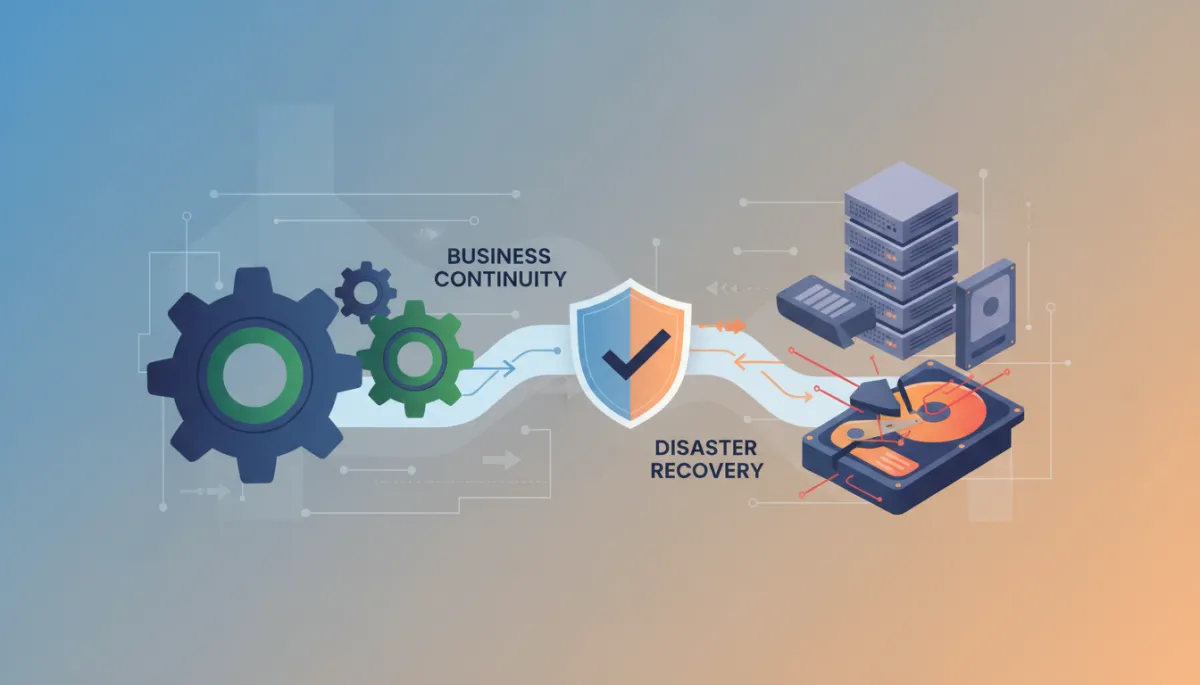
Business Continuity vs Backup: Key Differences
Business Continuity, Backup, Disaster Recovery
Business Continuity vs. Backup: Why Agencies and Businesses Need More Than Copies of Their Data
Many organizations believe that having a Backup solution is the same as having a Business Continuity plan. In reality, they serve very different purposes. For businesses and agencies that cannot afford prolonged downtime, understanding the distinction between Business Continuity, Backup, and Disaster Recovery is essential to protecting operations, reputation, and revenue.
Defining the Core Concepts: Business Continuity, Backup, and Disaster Recovery
To build a resilient organization, it is important to start with clear definitions. While the terms are often used interchangeably, they address different layers of risk and resilience within a business or agency environment.
What Is Business Continuity?
Business Continuity is a strategic, organization-wide approach to ensuring that critical services and processes can continue, or be rapidly restored, during and after a disruption. It looks beyond technology and data to include people, facilities, communications, suppliers, and governance. A Business Continuity plan answers questions such as:
Which services and processes are mission-critical for our business or agency?
How long can each of these be unavailable before there is unacceptable impact?
What alternative processes, locations, and resources will we use if our primary environment is unavailable?
In other words, Business Continuity is about keeping the organization functioning, even when core systems or sites are disrupted. Backup and Disaster Recovery are important inputs to this strategy, but they are not the entire solution.
What Is Backup?
Backup is the process of creating copies of data, applications, or system configurations so they can be restored if the originals are lost, corrupted, or deleted. Backups answer the question, “Can we get our data back?” They do not answer “How quickly can we resume business?” or “What will staff do while systems are restored?”
For many smaller businesses and agencies, having a nightly Backup to the cloud or an external device feels reassuring. However, relying solely on Backup can create a false sense of security. You may be able to restore a server, but if that process takes days and there is no plan for alternative operations, the organization still faces severe disruption.
What Is Disaster Recovery?
Disaster Recovery focuses specifically on how technology systems and data will be restored after a significant incident, such as a cyberattack, hardware failure, natural disaster, or major power outage. It is more comprehensive than basic Backup, because it considers:
Recovery Time Objectives (RTO): how quickly systems must be restored
Recovery Point Objectives (RPO): how much data loss is tolerable, measured in time
Alternative infrastructure: secondary data centers, cloud environments, or failover systems
Disaster Recovery is therefore the technology backbone that supports Business Continuity. It ensures that key systems can be brought back online within acceptable timeframes, using reliable Backup data and tested recovery processes.

Coordinated business continuity and disaster recovery planning reduces downtime and financial impact.
Why Backup Alone Is Not Enough for Modern Organizations
For agencies serving citizens and businesses operating in competitive markets, prolonged downtime is no longer acceptable. Regulations, service-level commitments, and customer expectations demand higher levels of resilience than Backup alone can provide. There are several reasons for this gap.
Downtime Costs More Than Data Loss
Backup primarily addresses the risk of losing information. Yet, the most significant losses often stem from the time systems are unavailable. During downtime, agencies may be unable to deliver essential services, and businesses may miss orders, lose clients, or incur contractual penalties. Staff may be idle, while leadership spends valuable time managing the crisis rather than focusing on strategic priorities.
A mature Business Continuity strategy, supported by robust Disaster Recovery capabilities, aims to reduce both the duration and the impact of downtime. It provides clear procedures, predefined communication plans, and alternative workflows to keep operations moving while technology is restored.
Cybersecurity Threats Require Integrated Recovery Strategies
Ransomware and other cyberattacks have changed the risk landscape. If Backup data is not properly protected, it can also be encrypted or compromised. In such scenarios, organizations need more than a copy of their files; they require an integrated Disaster Recovery plan that includes immutable backups, isolated recovery environments, and coordinated Business Continuity procedures to manage communications, regulatory notifications, and stakeholder expectations.
People, Processes, and Facilities Matter as Much as Technology
Backup and Disaster Recovery are technology-centric. Business Continuity expands the focus to include people and processes. For example, if an office becomes inaccessible due to a regional incident, staff may need remote access, alternative sites, or revised workflows. Critical paper-based processes may require digitization. Key suppliers and partners may also need to be aligned with your continuity strategy to avoid bottlenecks during a disruption.
📌 Key Takeaway: Backup protects data; Disaster Recovery restores systems; Business Continuity keeps the entire organization functioning through disruption.
Building a Business Continuity Strategy That Leverages Backup and Disaster Recovery
For businesses and agencies, the goal is not to choose between Business Continuity, Backup, and Disaster Recovery, but to integrate them into a cohesive resilience framework. The following steps provide a practical approach to achieving this.
1. Conduct a Business Impact Analysis
A Business Impact Analysis (BIA) identifies critical services, processes, and systems, and estimates the operational, financial, and reputational impact of their interruption. For each key function, define acceptable Recovery Time Objectives and Recovery Point Objectives. These metrics will guide both your Disaster Recovery design and your broader Business Continuity planning.
2. Align Backup Policies with Business Priorities
Not all data is equal. Use insights from the BIA to prioritize Backup frequency, retention, and storage locations. Mission-critical systems may require near-continuous replication, while less critical data can follow a more traditional Backup schedule. Ensure that Backup solutions support secure, encrypted storage and that copies are stored in geographically separate locations to protect against regional incidents.
3. Design and Test Disaster Recovery Scenarios
Disaster Recovery planning should translate RTO and RPO targets into tangible technical architectures. This may include warm or hot standby environments, cloud-based recovery sites, or automated failover for key applications. Regular testing is essential. Simulated failovers validate that Backup data is usable and that systems can be restored within the required timeframes. Testing also helps refine runbooks, roles, and responsibilities across IT and business teams.
4. Develop Comprehensive Business Continuity Plans
With Backup and Disaster Recovery capabilities defined, expand your planning to cover the broader organization. Business Continuity documentation should include:
Clear roles and escalation paths during an incident, including executive oversight and communications leads
Procedures for relocating or enabling remote work for key teams
Communication templates for staff, customers, partners, regulators, and the public
Dependencies on third parties and how they will be managed during disruptions
5. Train, Communicate, and Continuously Improve
A Business Continuity plan is only effective if people understand their roles and can execute them under pressure. Regular training, tabletop exercises, and cross-functional simulations help embed continuity thinking into the organization’s culture. Feedback from these activities should be used to refine Backup strategies, Disaster Recovery runbooks, and Business Continuity documentation on an ongoing basis.
The Strategic Advantage of True Business Continuity
For agencies tasked with public service and businesses operating in crowded markets, resilience is becoming a strategic differentiator. Stakeholders increasingly expect organizations to maintain operations despite disruptions, whether caused by cyber incidents, infrastructure failures, or external crises. Those that invest in a holistic approach to Business Continuity, underpinned by robust Backup and Disaster Recovery, are better positioned to protect their reputation, maintain trust, and meet regulatory obligations.
Moving beyond simple Backup is not merely a technical upgrade; it is a shift in mindset. It means planning for when, not if, disruption occurs, and ensuring that your organization can respond with confidence, clarity, and control. By integrating Business Continuity, Backup, and Disaster Recovery into a single, well-governed framework, businesses and agencies can transform potential crises into manageable events rather than existential threats.
Ultimately, resilience is an investment in the long-term stability and credibility of your organization. Backups may save your data, but a comprehensive Business Continuity strategy ensures that your business, your services, and your relationships endure.
💡 Ready to Strengthen Your Continuity Strategy with TCI? If you’re unsure whether your current backup and disaster recovery approach can truly keep your organization running through a disruption, TCI can help.
Our experts work with agencies and businesses to design, implement, and test end-to-end Business Continuity, Backup, and Disaster Recovery solutions tailored to your risk profile and regulatory requirements.
Contact TCI today to start building the resilient foundation your operations deserve.
