License Plate Recognition (LPR) Cameras
License Plate Recognition Technology: How LPR Cameras Are Revolutionizing Parking and Facility Security
When most people think about security cameras, they picture wide-angle lenses capturing general footage of a scene. But what if your security system could do more than record — what if it could read, log, and act on every vehicle that enters or exits your property?
That's exactly what License Plate Recognition (LPR) technology delivers. Also known as Automatic License Plate Recognition (ALPR), this powerful surveillance tool is rapidly becoming a standard component of modern security installations — from college campus parking garages to corporate campuses, hospitals, retail centers, and government facilities.
At TCI, we recently completed a comprehensive security installation at a local community college parking garage in Chesapeake, VA, that featured LPR cameras as a core component. In this post, we'll break down exactly what LPR technology is, how it works, why it matters, and how it can benefit your facility.
What Is License Plate Recognition (LPR) Technology?
License Plate Recognition is a form of optical character recognition (OCR) technology that uses specialized cameras and software to capture, read, and record the alphanumeric characters on vehicle license plates — automatically, in real time, and at high accuracy.
Unlike standard surveillance cameras that store video footage, LPR systems actively extract and log data. Every time a vehicle passes through a monitored entry or exit point, the system captures an image of the plate, converts it into readable text using OCR algorithms, timestamps it, and stores the record in a searchable database.
Modern LPR cameras are engineered to perform in challenging conditions — capturing plates at vehicle speeds, in low-light environments, at night with infrared illumination, and even in adverse weather. The result is a highly reliable, automated system that generates actionable data without requiring human monitoring.
How Do LPR Cameras Work?
The LPR process can be broken down into a few core steps:
1. Image Capture
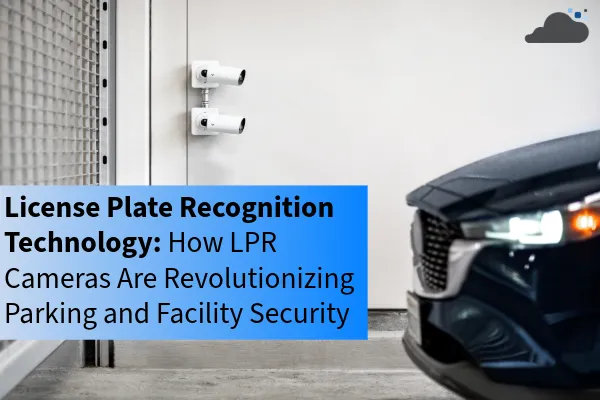
Strategically placed bullet cameras or dedicated LPR cameras are positioned at entry and exit points, aimed at the license plate zone of approaching and departing vehicles. These cameras typically use high-resolution sensors paired with infrared (IR) illuminators that make plate text visible even in complete darkness.
2. Plate Detection and Character Recognition
Onboard or server-side software analyzes each captured frame, identifies the license plate region within the image, and applies OCR algorithms to extract and decode the alphanumeric characters. Advanced systems can handle multiple plate formats, different fonts, and even partial obstructions.
3. Data Logging and Storage
Each recognized plate is logged with a timestamp, camera ID, and optionally a photo of the vehicle. This data is stored in a secure, searchable database that security personnel can query at any time — whether to investigate a specific incident or audit access over a period of time.
4. Alerts and Integration
LPR systems can be configured to cross-reference captured plates against watch lists — flagging stolen vehicles, unauthorized vehicles, or persons of interest — and trigger real-time alerts to security staff or law enforcement. They can also integrate with gate control systems to automate access for authorized vehicles.
Key Benefits of LPR Technology for Facilities and Campuses
LPR is not just about surveillance — it's about creating smarter, more proactive security infrastructure. Here are the most impactful benefits:
Enhanced Perimeter Security and Access Control
One of the most powerful applications of LPR is access control. By maintaining a database of authorized vehicles — staff, faculty, residents, or registered tenants — an LPR system can automatically grant or deny gate access without the need for keycards, parking passes, or manual verification. This reduces bottlenecks at entry points and eliminates the risk of lost or stolen passes being misused.
Incident Investigation and Evidence Collection
When an incident occurs — vehicle theft, vandalism, hit-and-run, or unauthorized access — LPR data provides an invaluable investigative resource. Security teams and law enforcement can quickly pull timestamped records to identify which vehicles were present, trace a suspect vehicle's movements through the property, or confirm that a particular plate did or did not access the facility during a given timeframe.
Deterrence of Criminal Activity
Visible LPR cameras are a strong deterrent. When would-be criminals know that every vehicle entering a parking structure is being logged and associated with their license plate, they are far less likely to use that facility to commit theft, assault, or other crimes. This deterrent effect is especially meaningful in high-traffic areas like university parking garages, where large volumes of people and vehicles create opportunities for criminal activity.
Parking Enforcement and Revenue Protection
For facilities with paid or permit-based parking, LPR dramatically streamlines enforcement. The system can automatically flag vehicles that have overstayed their allotted time, entered without payment, or lack the appropriate permit — allowing enforcement staff to respond efficiently and consistently. This not only protects revenue but creates a fairer environment for all users.
Improved Response Times for Security Personnel
When integrated with alert systems, LPR enables faster, more targeted security responses. Rather than reviewing hours of general video footage after an incident, security teams receive immediate, specific data — a plate number, a timestamp, a camera location — that dramatically reduces the time needed to respond to or investigate incidents.
LPR in Action: Our Chesapeake, VA Community College Installation
Our recent project at a community college parking garage in Chesapeake, VA illustrates exactly how LPR integrates into a layered security strategy. The installation included two strategically placed LPR bullet cameras positioned to capture and log plate data at key vehicle entry and exit points throughout the garage.
These cameras work in concert with the rest of the security ecosystem we deployed:
•A PTZ (pan-tilt-zoom) camera that actively monitors large areas and can track movement in real time.
•A 360° panoramic camera that eliminates blind spots in high-traffic zones of the garage.
•An emergency call box providing immediate access to help for students, staff, and visitors at any time.
Together, this multi-layered approach ensures that the parking garage isn't just monitored; it's actively protected. The LPR system creates a verifiable record of every vehicle that accesses the facility, providing both a deterrent against criminal activity and a critical investigative resource when incidents do occur.
Who Benefits Most from LPR Security Systems?
License plate recognition technology delivers measurable value across a wide range of facility types:
•Colleges and Universities – Protect students, staff, and campus property across large, multi-access parking facilities.
•Corporate and Office Parks – Control access for authorized employees while maintaining visitor logs.
•Hospitals and Healthcare Campuses – Monitor high-traffic parking areas and protect patients, visitors, and staff.
•Retail Centers and Shopping Malls – Deter vehicle theft, smash-and-grabs, and enforce parking rules.
•Residential Communities and HOAs – Automate gate access and maintain records of all vehicle entries.
•Municipal Facilities and Government Buildings – Enhance security perimeters and support law enforcement investigations.
•Industrial and Warehouse Facilities – Protect assets and monitor vendor and contractor access.
Choosing the Right LPR Solution: What to Look For
Not all LPR cameras and systems are created equal. When evaluating options for your facility, consider the following:
•Resolution and Frame Rate – Higher resolution sensors and faster frame rates mean more accurate plate reads, especially for fast-moving vehicles.
•Infrared (IR) Illumination – Essential for nighttime and low-light performance without the need for additional lighting infrastructure.
•Software and Integration Capabilities – Look for systems that integrate with your existing VMS (Video Management Software), access control platforms, and alert systems.
•Storage and Retention – Consider how long you need to retain plate logs and ensure your storage solution can accommodate that volume of data.
•Installation Positioning – Camera placement is critical. Strategic positioning to capture clean plate angles at entry and exit points is just as important as the hardware itself.
•Compliance and Privacy Considerations – Ensure your LPR deployment complies with applicable local and state regulations regarding data collection and retention.
LPR Is Part of a Smarter Security Strategy
While LPR technology is powerful on its own, it delivers the most value when integrated into a comprehensive, layered security system. Pairing LPR with PTZ cameras, 360° panoramic coverage, emergency call stations, and centralized monitoring creates an environment that doesn't just react to incidents; it actively prevents them.
The reality is that parking lots and garages are among the most vulnerable areas of any campus or facility. They are often poorly lit, relatively isolated, and see high volumes of vehicles and foot traffic throughout the day and night. A modern LPR-integrated security system closes those vulnerabilities and gives facility managers, security teams, and the people who use the space real confidence in their safety.
Ready to Upgrade Your Facility's Security? TCI Can Help.
At TCI, we specialize in designing and installing customized physical security solutions — including security cameras, access control, business alarm systems, environmental sensors, guest management, and emergency communications — for facilities of all sizes across Virginia and the Hampton Roads region.
If your parking lot, garage, or facility has gaps in coverage, now is the time to rethink your security strategy. Whether you're starting from scratch or upgrading an existing system, our team will assess your site, identify vulnerabilities, and design a solution that works for your budget and your goals.
Contact TCI Now to schedule a security assessment and find out how LPR and integrated surveillance technology can protect your property, your assets, and the people who matter most.
